Updated
Forecasting market fluctuations for 2024-2025 and the outlook for Masan Group stock price.
August 01, 2024

The international economy is still struggling to recover fr om the Covid-19 epidemic in the first half of 2023, and there are still many obstacles to overcome. Numerous elements that are extremely complex, unexpected, hard to anticipate, or even surpass predictions, occur, delaying the recovery process and increasing the likelihood of a global economic downturn. The gap between aggregate demand and production costs is closing, which affects trade, business, and investment activities. Each economic powerhouse struggles with their own problems with different approaches to recover their economy. In that context, Vietnam is still emerging with Vietnam business opportunities for both local and foreign investors.
The US economy was battling high inflation rates through many rounds of increasing interest rates. The US Federal Reserve (Fed), which has overseen setting interest rates for the previous 22 years, agreed to increase the federal funds rate by 0.25 percentage points at the end of July. Analysts and economists think the Fed has been extremely effective in cutting inflation without sparking an economic recession, despite Fed Chairman Jerome Powell's September statement that he had not ruled out another rate rise.
The US economy is predicted to turn for the better from the third quarter of 2023 with consumer spending being the one of the main engines of growth. Citigroup estimates that US families still have $1.4 trillion in savings that they can utilize to spend money despite limited credit from the effect of high interest rates.
In China, after coming out of its strict ‘Zero Covid’ policy, the world was expecting China to bounce back strongly, pulling the world economy back on track. However, the figures prove otherwise. Contrary to the US, the inflation rate in China was recorded at 0%. The second-largest economy in the world, recorded a dismal second-quarter GDP growth rate compared to the first quarter, its young unemployment rate reached a record high in June 2023, exports dropped. These problems are the most recent indication of China's sluggish recovery.
In addition, retail sales in China increased barely 0.2% from May to June, indicating that families are being more frugal with their spending. Economists claim that this prudence is a sign that customers are concerned about their employment and the status of the economy.
In Russia, the economic picture seems to be quite surprising. It is assumed that the Russian economy must have been severely harmed since Russia was subjected to severe economic sanctions during the conflict with Ukraine and was kicked out of the SWIFT payment system. However, in 2022, Russia's GDP had topped $2 trillion, and its GDP per person had already surpassed $15,000.
The Russian economy is expanding rather than contracting for two reasons. The first is that at the start of the conflict, global oil prices rose, making Russia once again a significant energy exporter. The second is that Russia has experienced inflation, and the rapid rise in prices has also greatly increased GDP.
With the current situation of the world economy, Vietnam also faced significant impacts from instability in global geopolitics, leftover effects of Covid-19 leading to disruption of the supply chain, increased inflation and the lack of exporting orders. However, Vietnam business opportunities have not completely diminished as the country still remains resilient with positive performance.
Vietnam's GDP growth rate for the first half of the year was 3.72%, which, although being less than last year, is still an encouraging statistic given the challenges facing the global economy. In comparison to the same time in 2022, the average CPI only climbed at a modest rate of 3.12% in the first seven months of this year. It is a promising indicator that 2023 will meet the goal because the average CPI growth rate tends to steadily decline over the months, going towards the goal of 4.5% inflation rate.
Much of the growth rate was attributed to retailing of goods and services wh ere the total retail sales of consumer goods and services at current prices increased by 10.4% by August 2023 compared to the same period last year, according to the General Statistics Office. This shows that despite decreased consumer sentiment, consumption of essential goods still remains strong.
As of August 20, 2023, the total registered FDI capital entering Vietnam had reached about 18.15 billion USD, up 8.2% from the same period in 2022, according to the Foreign Investment Agency (Ministry of Planning and Investment). Thus, foreign direct investment (FDI) into Vietnam in August 2023 was 1.91 billion USD as opposed to 16.24 billion USD attracted in 7 months. This shows that Vietnam business opportunities in Vietnam still prove its attractiveness to investors.
Out of the 21 national economic sectors, 18 have received investments from international investors. With investments totaling approximately 13 billion USD, or roughly 67.8% of all registered investment capital and an increase of 14.7% over the same time, the processing and manufacturing industry grabbed the lead.
With FDI partners investing in Vietnam business opportunities, China ranked second with nearly 2.69 billion USD, accounting for 14.8% of total investment capital, up 90.8% over the same period. Singapore took the lead with a total investment of more than 3.83 billion USD, accounting for more than 21.2% of total investment capital in Vietnam, down 15.4% over the same period in 2022. With more than 2.58 billion USD in total registered investment capital—more than 14.2% of all investment capital—and an increase of 73.1% over the same time, Japan came in third place. Korea, Hong Kong, Taiwan, and the others were next.

Within the last 6 months, challenges from macroeconomic conditions negatively impact the confidence of both consumers and businesses. However, Masan is one of the few corporations that was able to maintain its momentum in business performance.
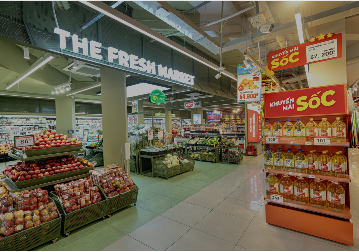
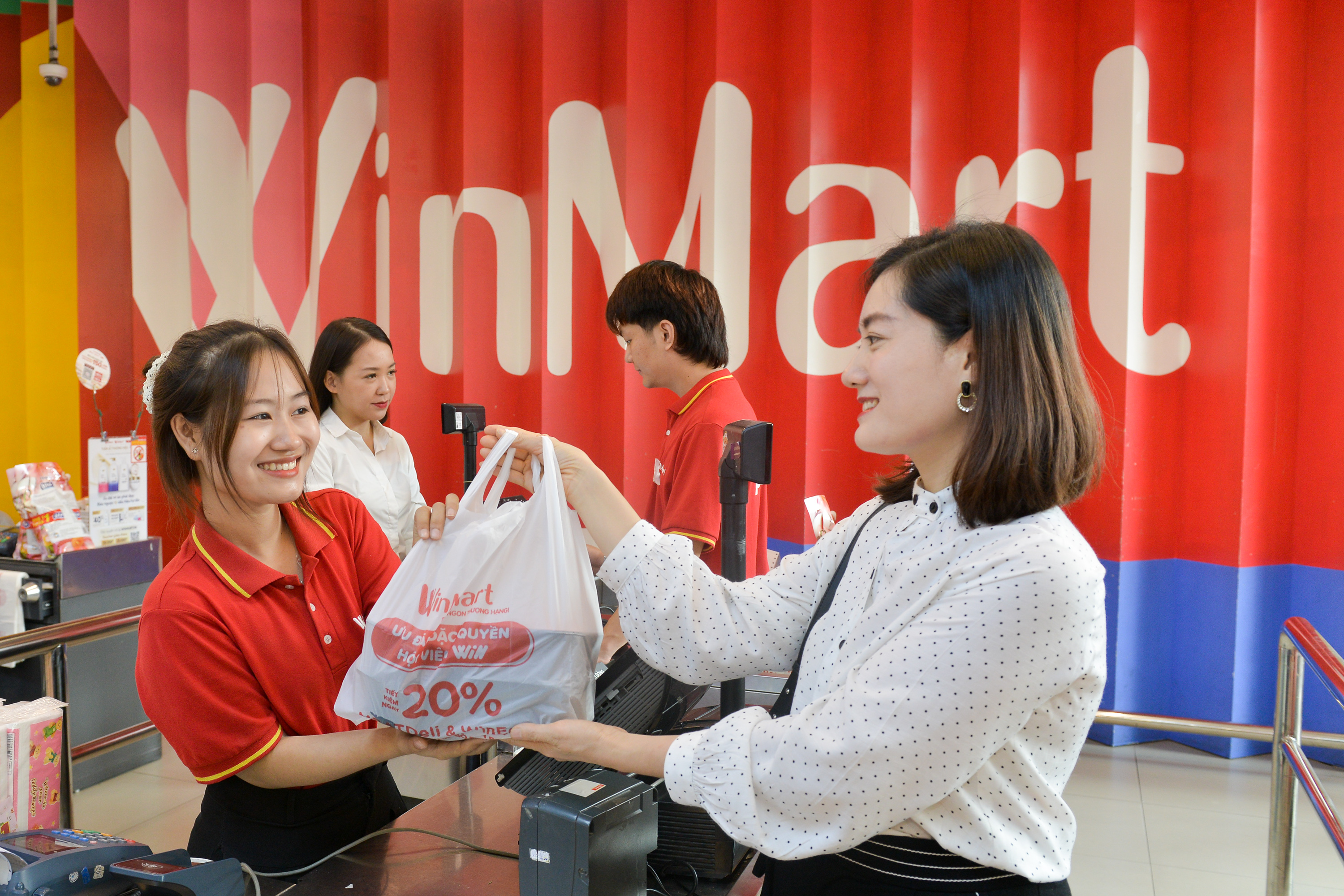
Masan's net revenue (MSN) in the first half of 2023 was VND 37,315 billion, up 3.6% from VND 36,023 billion in the same period the previous year. Additionally, according to information from Masan's financial records, WinCommerce (WCM) revenue registered a 1.5% YoY increase in the first six months of 2023 and 2.5% YoY compared to the same period last year while profits were generally safeguarded. This was despite declining consumer mood having an impact on sales productivity. The positive result was due to the multiple efforts in upgrading store formats that are better suited for each particular customer segment.
Vietnam business opportunities in consumer goods continue to stay strong with Masan Consumer reporting outstanding year-over-year revenue growth of 11.6% and 21.7%, respectively. It also produced consistent gross margin development. Throughout the first half of 2023, constant at 43.5%.
In most of the product categories, including condiments, convenience foods, and personal and home care products (HPC), demand for MCH's goods increased. These categories saw a growth rate of 21.3%, 7.8%, and 52.1% in 6 months of 2023 respectively. These categories saw respective revenue growth rates of 73.6%, 24.6%, and 29.8% in the second quarter of 2023.
According to the Euromonitor data, the world economy is projected to have a GDP growth of 2.6% by the end of 2023. In 2023–2024, emerging and developing economies will continue to be the primary drivers of global economic development, thanks in part to rising investment, tourism, and domestic activity that is on the upswing. The prognosis, however, varies between markets and geographical areas. Some emerging Asian economies, including India, the Philippines, and Vietnam will continue to see strong growth in 2023 as a result of favorable trends in investment and consumption.
The International Monetary Fund (IMF) predicts that Vietnam's economic development will rebound in the second half of this year, and there are numerous signs of growth by the end of the year. Additionally, according to the Organization for Economic Cooperation and Development (OECD), the Vietnamese economy would expand by 6.5% this year. The second half of the year will see growth of 7%, according to Standard Chartered Bank.
Vietnam's economy is now being driven by three main pillars: domestic consumption, state investment, and industry, including import and export, according to Dr Bui Quang Binh.
Vietnam business opportunities towards the end of the year lie in the export industry in manufacturing. In anticipation of the holiday season, FDI businesses are prepared to ramp up output. The evidence includes the fact that, according to S&P Global, stockpiles of business input materials grew for the first time since the end of 2022, and that both Vietnam's imports and exports climbed by 2% on a monthly in July. Vietnam's PMI increased from 46.2 in June to 48.7 in July thanks to a better improvement in export orders and a 4% increase in industrial production month-over-month.
Also following the total retail sales of consumer goods and services result, domestic consumption is also a key part of Vietnam’s economic growth towards the end of the year. There have been efforts from the government to reduce the VAT from 10% to 8% until the end of the year in order to encourage more positive consumer sentiment and spending, creating better Vietnam business opportunities for producers and retailers. Apart from governmental efforts, brands have been and will continue to introduce marketing events starting from October all the way to New Year’s celebrations, Lunar New Year and Valentine's day.
Nonetheless, there still lies some challenges to achieve a GDP growth rate of 6.5%. There was a modest recession in the global economy, and there was a decline in global demand for goods and services due to rising inflation. This results in a decline in both domestic and foreign orders, which narrows Vietnam business opportunities in domestic production and has an impact on several processing and manufacturing businesses. Additionally, the value of exports declined, particularly for consumer items, as did the production of the processing industry.

The lack of raw resources globally and high transport costs have raised manufacturing expenses at the same time, which has a negative impact on the competitiveness of Vietnamese goods and pressures inflation. In particular, because China is a big import and export market for Vietnam, even if its economy is growing, it is still recovering slowly, which has had a considerable effect on Vietnam's economy.
Considering all the current performance of the world economy and Vietnam’s economy along with the future opportunities and challenges, it is safe to say that Vietnam business opportunities continue to be plentiful towards the end of the year. With appropriate fiscal policies from the government and a positive turn of the world economy, Vietnam is on track to reap great achievements.