Updated
Forecasting market fluctuations for 2024-2025 and the outlook for Masan Group stock price.
August 01, 2024

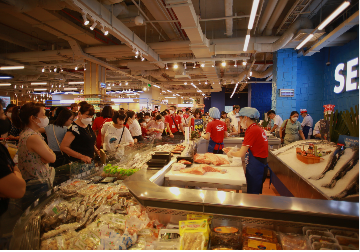
Masan Group is dedicated to enhancing the material and spiritual well-being of Vietnamese people through a consumer-focused approach. The Group consistently aims to deliver essential products to every Vietnamese household, beginning with the production of fish sauce and expanding to the development of consumer tech platforms that cater to all consumer needs. Their goal is to serve 100 million Vietnamese consumers.
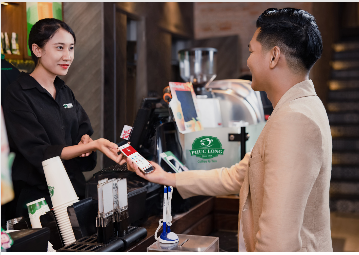
Consumer tech is a broad concept, encompassing various applications across different aspects of daily life. It includes a wide range of products and services designed to solve existing problems and enhance consumers' daily experiences. For instance, consumer tech can offer innovative shopping experiences and user-friendly digital services.
In the post-Covid era, numerous industries have rapidly adapted to the new environment, particularly the consumer sector. People's consumption habits and attitudes are evolving in this period, creating an opportune moment for the growth of consumer tech.
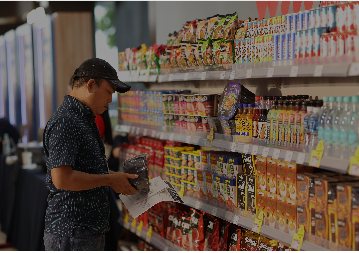
The pandemic and recent macroeconomic fluctuations have significantly altered consumer shopping habits and retail operations. Retailers are adapting to new trends, as the domestic economy shows little improvement. Consumers are increasingly turning to technology for shopping at home, tightening their budgets, and prioritizing reasonably priced items that offer good value.
A recent J.P. Morgan report highlights Vietnam as one of the most promising retail consumption growth markets in Asia. However, the penetration of Vietnam's commodity retail sector remains shallow, comprising only 12% of the market by 2022. This is considerably lower than the 20-45% penetration rates in ASEAN countries, with only India trailing behind at 8%. Additionally, Vietnam has a moderate level of marketing channel utilization to create a competitive edge in the region.
Therefore, retail businesses must adapt to market trends to effectively reach and create value for consumers. Embracing consumer tech, particularly through the application of AI (Artificial Intelligence) and ML (Machine Learning), is essential for retail businesses aiming to capture a share of the $350 billion market. Recent transformations in the retail industry, including shifts in shopping behaviors, technological advancements, new store models, and the integration of online and offline sales channels, are reshaping the retail landscape and introducing new shopping experiences for the future.
As a leading enterprise in the modern consumer retail industry, Masan has leveraged digital transformation to evolve into a consumer-technology group since 2021, accelerating this shift from 2022 to the present. In 2024, Masan plans to further enhance technology application across its retail consumer ecosystem.
With over 28 years of experience in the consumer sector, Masan has a deep understanding of market challenges. The POL consumer tech ecosystem, an offline-to-online system, comprises three main elements: products and services provided by Masan, commercial infrastructure connecting all ecosystem partners, and a technology platform capable of data analysis through AI and ML, integrating both human and organizational resources at Masan.
During the event "Application of AI, ML, and Data Science Technology in Consumption - Retail," Masan highlighted the significant challenges in the consumer value chain. The primary challenge for brands, products, and services is the lack of data necessary for innovation and enhancing user value.
For instance, when changing product packaging, businesses require data on consumer preferences such as color, material, and design to find the optimal solution. Additionally, high purchasing costs pose significant challenges. By creating purchasing lists based on market demand data, businesses can better manage these expenses.
Another critical challenge is the risk of lost sales due to product shortages at points of sale, often resulting from inadequate inventory planning. For retailers, improper stockpiling is a common issue. Monitoring the flow of goods and inventory across different sales channels is also a considerable challenge. Furthermore, to boost sales, businesses frequently launch marketing programs. However, these activities can negatively impact profits if marketing costs are not managed effectively.
Third, for customers: If businesses fail to optimize operating costs, customers will face higher prices for products and services. Enhancing the customer experience is crucial, especially with the growing trend of personalization. To build consumer trust and boost sales conversion rates, businesses must leverage data, such as purchase history, to offer products that are genuinely tailored to individual customers' preferences.
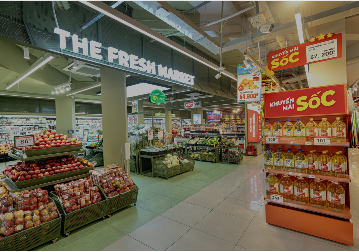
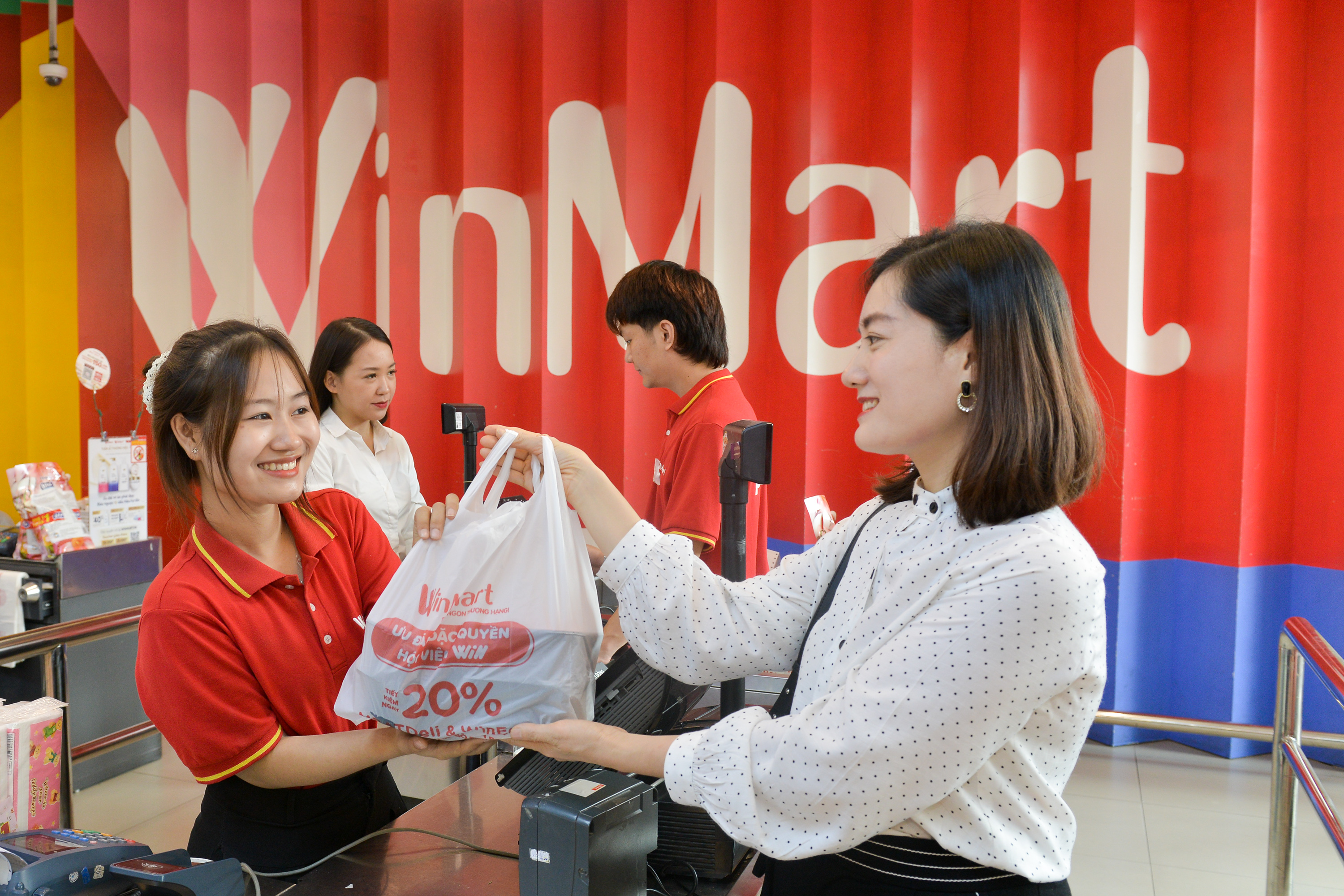
Masan's POL ecosystem addresses critical issues, optimizing operations across the entire consumer value chain. By integrating over 3,600 WinCommerce stores and supermarkets into the Supra logistics system, Masan creates a nationwide platform that reduces costs and enhances consumer accessibility.
This integration allows customers to purchase and experience products and services anywhere in Vietnam. Masan also plans to collaborate with numerous renowned domestic and international partners, including an ongoing partnership with Lazada.
Supra currently operates a distribution center system with 10 warehouse clusters (including both dry and cold storage) across all three regions of Vietnam. Supra handles 60% of WinCommerce's total goods output. The company employs AI technology in order placement, delivery, sorting, and selecting goods at the warehouse, centrally controlling product quality and ensuring the efficient and cost-effective transport of goods. Besides, for the solution to the problem of increasing personalized experience for users, Masan realized that many people do not like mass promotions. This drives Masan's retail efforts towards finding ways to give each consumer a unique, personalized offer based on their purchasing history.
In 2023 and the following years, Masan will continue its good growth momentum as it expands investment in technology with a focus on applying AI and ML technology to improve business efficiency as well as reshape the consumer experience. used to truly become a consumer-tech ecosystem.
The links in Masan's consumer tech value chain are closely linked together to maximize value for customers and at the same time help businesses achieve their set goals. In 2024, Masan will continue to optimize operations and digitalize the warehouse system throughout its retail consumer ecosystem.
Masan Group is steadily realizing its vision of transforming the shopping and food consumption habits of Vietnamese consumers. By integrating technology into its retail chain, the company anticipates reducing consumer goods costs by 5% and increasing profits for sellers and manufacturers by 5%. Masan is also accelerating its digital transformation efforts to enhance performance across the entire consumer value chain, while simultaneously bolstering customer loyalty programs and embracing multi-convenience store models to effectively cater to modern consumer needs.
In 2024, Masan aims to achieve a core Pre-MI ranging between VND 2,290 and 4,020 billion. In an optimistic scenario, Masan's profit is poised to double sharply from VND 1,950 billion in 2023. The AI & ML technology platforms are expected to significantly contribute to Masan's growth not only in 2024 but also in the foreseeable future.
A survey conducted by the analysis centers of three prominent securities firms—SSI Research, BSC Research, and BVSC Research—reveals unanimous forecasts of robust revenue and after-tax profit growth for Masan's parent company in 2024. SSI Research projects a profit surge of 177.4% to VND 1,161 billion, while BSC Research anticipates a 204.1% increase to VND 1,041 billion, and BVSC Research forecasts a remarkable 294.4% profit escalation to VND 1,651 billion.