Updated
Forecasting market fluctuations for 2024-2025 and the outlook for Masan Group stock price.
August 01, 2024

After the pandemic, Vietnam is one of the few countries that has achieved certain developments and needs to follow the post-pandemic recession trend. This makes Vietnam a top destination for many investors, especially foreign direct investments to invest in Vietnam. So, what is the comprehensive reality of investment in Vietnam today? Why invest in Vietnam? How does Vietnam attract investment capital?
According to the UNCTAD's Global Investment Report 2022, global FDI growth during the pandemic boomed, primarily due to investment flows to Asian countries. Among them, Vietnam is an indispensable name. In 2020, for the first time, Vietnam entered the top 20 countries, attracting the most investment capital globally. So why do foreign investors invest in Vietnam, and what in Vietnam attracts foreign investors, businesses, and corporations globally?
Vietnam is one of the beneficiaries of changing global frameworks and rapid adjustments to supply chains. On the one hand, Southeast Asia, particularly Vietnam, attracts European, Asian, and North American companies wishing to diversify their supply chains, making it an attractive destination for foreign companies looking to invest in Vietnam due to the dynamic and sometimes unpredictable developments of trade relations between the U.S. and China.
Vietnam is ideally positioned to support the diversification efforts due to the Free Trade Agreement with the E.U. and good trading relationships with China and the U.S. Furthermore, market entry strategies into Southeast Asia also benefit from Vietnam being a party to the ASEAN treaty framework.
As per Asia Business Outlook from India, Vietnam stands out as one of the rapidly expanding digital economies in Southeast Asia. In this context, robust government backing, including enticing tax incentives, combined with Vietnam's highly skilled workforce, have significantly contributed to the nation's emergence as an offshore manufacturing center. This appeal has grown as businesses seek to diversify and fortify their supply chains.
High inflation interest rates and currency fluctuations make it expensive and risky for businesses to expand into markets overseas. It can also be worked between permits, registrations, and visas, hiring staff, and dealing with in-country logistics. Opting for a local Vietnamese distributor could be a preferable choice.
Mr. Lawrence D. Bushnell, President of Gratia Dei Seafoods in Alaska, said that with a population of 100 million people and rising incomes, well-established U.S. businesses are targeting to invest in Vietnam market.
According to a survey conducted by the Japan Trade Promotion Organisation (JETRO) in 2022 with Japanese enterprises in Vietnam, 60% of the surveyed enterprises said they would expand their business in Vietnam in the next one or two years, the highest in ASEAN.
They also said Vietnam has the advantage of high growth potential, and businesses can increase revenue by expanding markets and increasing exports. Meanwhile, according to a January 2023 survey on the business environment of the European Chamber of Commerce in Vietnam (EuroCham), Vietnam is in the top 5 investment destinations globally.
The growth rate of 6.5% for the whole year, as set by the Government, is considered the most optimistic scenario. Although the country's GDP increased only 3.32% in the first quarter of this year, many reputable organizations still believe that the Government can achieve this goal. The Organisation for Economic Co-operation and Development (OECD), Standard Chartered Bank, and ADB forecast that Vietnam's GDP in 2023 will grow by 6.5%. This, combined with the country's young, tech-savvy population and favorable geographical location, will open up tremendous opportunities for foreign investment to invest in Vietnam.
Vietnam is in the top 70 global economies in 2020 (World Bank Business Report). At the end of 2020, the National Assembly passed the amended Law on Enterprise and Investment, which took effect from the beginning of 2021.
Those mentioned above are not the only answers to the question "Why invest in Vietnam?" but are the three most important ones. Developed countries like the United States invest in Vietnam for various reasons, including the country's consistent pursuit of high GDP development, healthy flow of FDI, active integration into the global economy, and the Government's constant provision of supportive policies and Vietnam investment incentives. Moreover, Vietnam is an excellent place to pour money for political and institutional stability.
Foreign Direct Investment (FDI) has emerged as a key driving force propelling Vietnam's economic growth and development. Foreign Direct Investment (FDI) has had a significant impact on Vietnam's economy, leading to technological advancements, job creation, and increased overall productivity.
In March, a group of 52 U.S. companies traveled to Vietnam to investigate potential business investment opportunities. The panel included companies from various sectors such as energy, finance-banking, insurance, manufacturing, information technology, healthcare, logistics, tourism, aerospace, and defense.
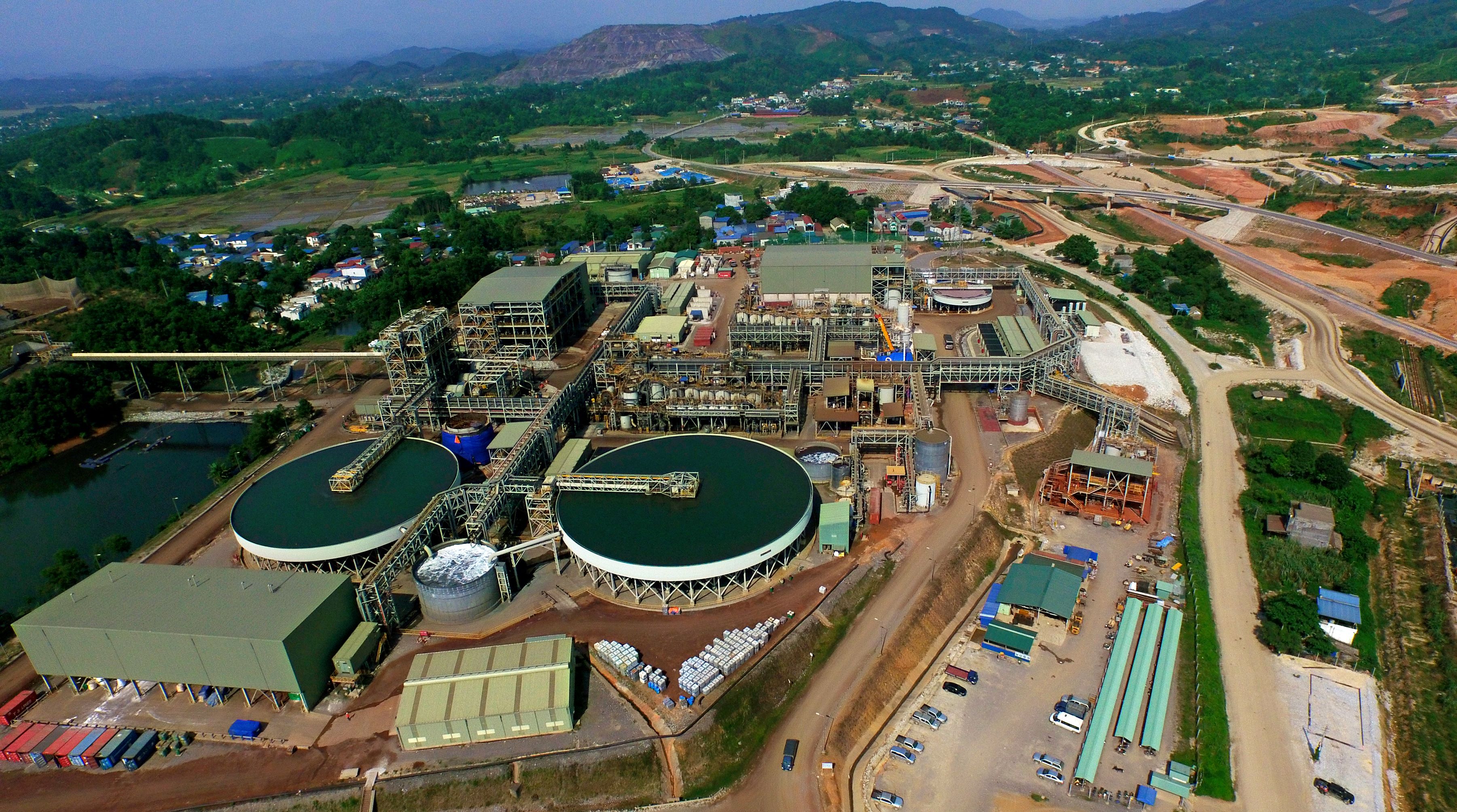
According to a Foreign Investment Agency (FIA) report under the Ministry of Planning and Investment, Vietnam has attracted more than USD 18.1 billion in foreign direct investment. (FDI) as of August 20, up 8.2% year-on-year.
Registered capital from foreign direct investment in Vietnam was just over USD2.8 billion in July, bringing the year's total to just over USD16.2 billion. This Foreign capital invested in Vietnam helps businesses gain more development advantages. Sustainable capital and cash flow will allow enterprises to be more stable to overcome difficult times—especially retail businesses.
Vietnam is becoming an attractive retail market for companies worldwide, with many regional and global FDI investors recently announcing plans to invest in Vietnam. With a growing economy, a stable political environment, and a relatively young workforce, Vietnam is on the rise, becoming an attractive destination for businesses looking to expand their operations in Asia.
According to data from the State Bank, the average VND interbank lending interest rate for the overnight term (primary term accounts for about 90-95% of transaction value) as of July 14 has decreased to 0.14 %/year. This represents the lowest overnight rate since the conclusion of January 2021. This hints at an accessible money market in the second half of 2023.
According to the MoIT, The Vietnamese retail market is worth USD 142 billion and is expected to increase nearly 2.5 times to USD 350 billion by 2025.
The FDI flow into Vietnam's retail market in the second half of 2023 is expected to be positive as the country continues to recover from the COVID-19 pandemic and attract more foreign investors. According to a report by Savills Vietnam, the retail market in Vietnam has shown strong resilience and adaptability, with a high occupancy rate of 94% in H1 2023, despite the social distancing measures and travel restrictions. The report also stated that the retail market is transforming, focusing more on e-commerce, omnichannel strategies, and customer experience.
The FDI flow into Vietnam's retail market in the second half of 2023 will likely be positive. Still, it also depends on various factors such as the economic recovery, the business environment, the government support, the competition, the legal framework, and the COVID-19 situation. Foreign investors who want to enter or expand in this market must conduct thorough market research, develop suitable strategies, and overcome potential.
For businesses in this industry, pressure from loan interest affects consumer psychology, thereby reducing revenue. However, with the advantage of steady cash flow from business activities associated with daily life and the State Bank's priority to lower interest rates, retail businesses will steadfastly overcome difficult times and accelerate to the finish line in the remaining quarters of 2023.
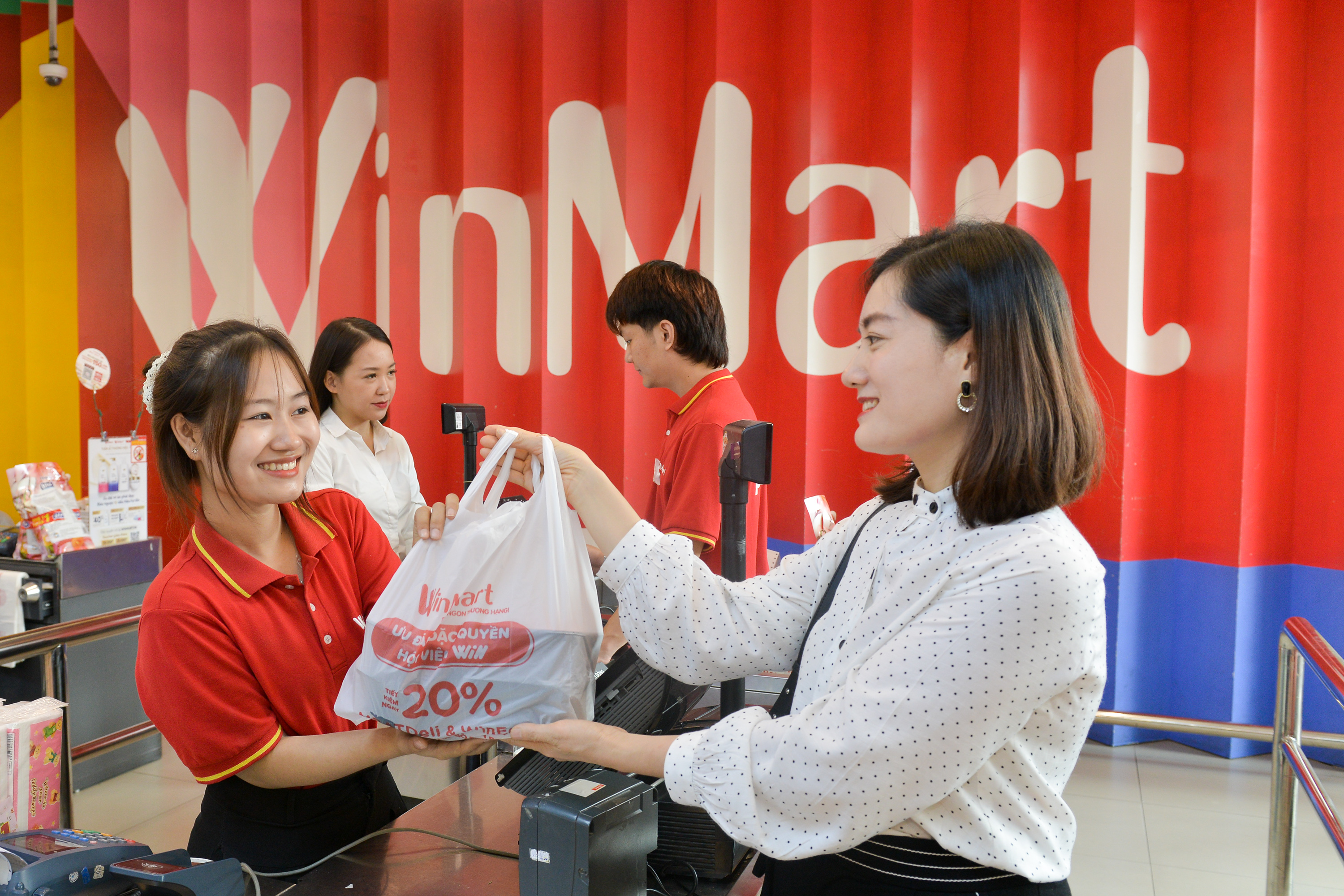
For example, Masan Group (MSN), according to the financial report of the second quarter of 2023, in general, the business results of this unit are still positive in a challenging macro environment. All three industries accounting for up to 80% of the Company's revenue, including WinCommerce (WCM), Masan Consumer (MCH), and Masan MEATLife (MML), all achieved positive growth, primarily based on LFL equivalent comparison. MCH revenue reached a growth rate of 21.7% over the same period in the second quarter of 2022. WCM's net revenue reached 14,517 billion VND in the first six months of 2023 and 7,182 billion VND in the second quarter of 2023, an increase of 1. 5% and 2.5% over the same period last year.
Despite noticeable deficits in legislation, regulations, bureaucracy, corruption, internal processes, and infrastructure, Vietnam continues to develop positively. Backed by a stable and predictable political framework, the shortcomings are gradually reduced to make the country even more attractive – especially for foreign investors.
Vietnam will continue to work hard on developing its industry and towards its modernization, effectiveness, and sustainability to generate higher competitiveness as a stable basis of an industrialized nation. The country will be able to exploit and take advantage of opportunities from signed Free Trade Agreements to remove trade barriers, which will, in turn, support the domestic export-oriented industries and open new and additional opportunities for trade and foreign direct investment.
Vietnam's retail market is increasing, with a projected CAGR of 12.05% from 2023 to 2028. Several factors drive this growth, including a growing young population, rising incomes, and increasing urbanization, opening many attractive opportunities for those looking to invest in Vietnam.
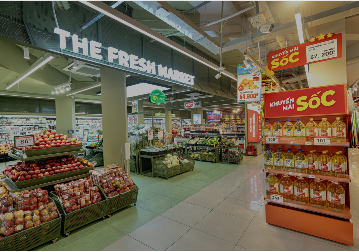
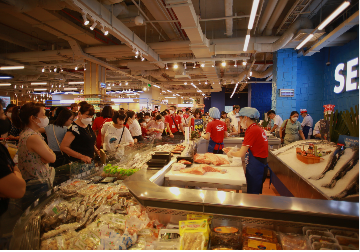
The retail sector in Vietnam is very diverse, combining traditional and modern forms. Conventional retailers like wet markets and mom-and-pop stores still account for a significant market share. However, modern retailers, such as supermarkets, convenience stores, and shopping malls, are growing.
The leading players in the Vietnamese retail market are Saigon Co.op, Masan Group, Central Group, AEON, and Lotte. These companies invest heavily in expanding their retail networks and developing new formats.

The growth of e-commerce is also significantly impacting the Vietnamese retail market. E-commerce sales in Vietnam are growing at a CAGR of 30% and are expected to reach USD 49 billion by 2025.
E-commerce has experienced rapid expansion in recent years. Vietnam is a promising market to invest in Vietnam for e-commerce enterprises, with a population of over 97 million people and a high internet penetration rate (over 98%). Vietnam's e-commerce sector is predicted to reach USD 32 billion in 2025, rising at a CAGR of 37% (Google, Temasek, and Bain & Company, 2022).
Masan Group is Vietnam's leading consumer-focused business group, and we believe in "Doing well by doing good." They aim to provide quality products and services for Vietnam's population of over 100 million, enabling them to get more value for money on their daily basic needs.
Their fundamental principle continuously transforms and fulfills the evolving consumer's significant unmet needs, leading to transformational value creation. As Vietnam develops economically, our consumers and their needs continue to grow, moving beyond daily essentials to a broader array of tailored products, services, and experiences that reflect their modern lifestyles and aspirations. Consumers are also increasingly tech-savvy and value convenience. Embracing these changes, Masan Group has gone beyond its role as a manufacturer of branded consumer goods. It is on its journey to becoming an integrated offline-to-online ("O2 ”) consumer-tech ecosystem. This is what they mean by "Our Consumer Tech Journey."
The Vietnamese retail market is vibrant and dynamic. Those who adapt to these trends will attract more FDI flows, invest in Vietnam, and be well-positioned for success. Despite some challenges, the Vietnamese retail market is promising for retailers. The market is growing; the middle class is growing with increasing spending power. Retailers that can overcome the challenges and adapt to the market trends will be well-positioned for success.